




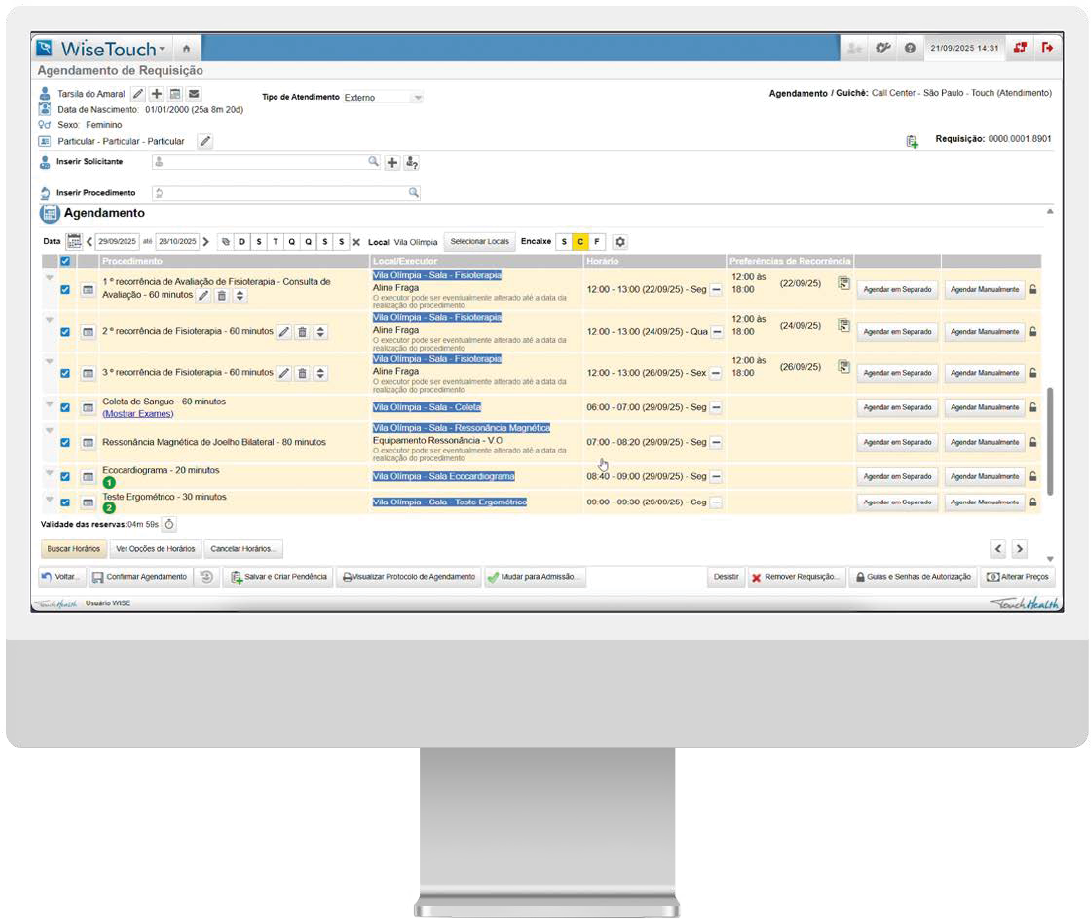
WiseTouch is a Smart Scheduling solution for medical procedures, including exams, consultations, therapies, and treatments.
WiseTouch manages the entire scheduling workflow: from calendar configuration and call center operations to on-site bookings and appointment confirmations.
Once scheduled, every appointment is seamlessly integrated with clinical management systems (HIS, RIS, LIS), ensuring a smooth and secure operation.
WiseTouch is designed for Hospitals, Clinics, and Diagnostic Centers of all sizes.
Touch Health offers various plans tailored to companies with different profiles and needs.


With built-in intelligent interaction, WiseTouch enables digital front-end solutions for all types of procedures, including SADT (Support for Diagnosis and Therapy)—and prepares your institution for the AI revolution.
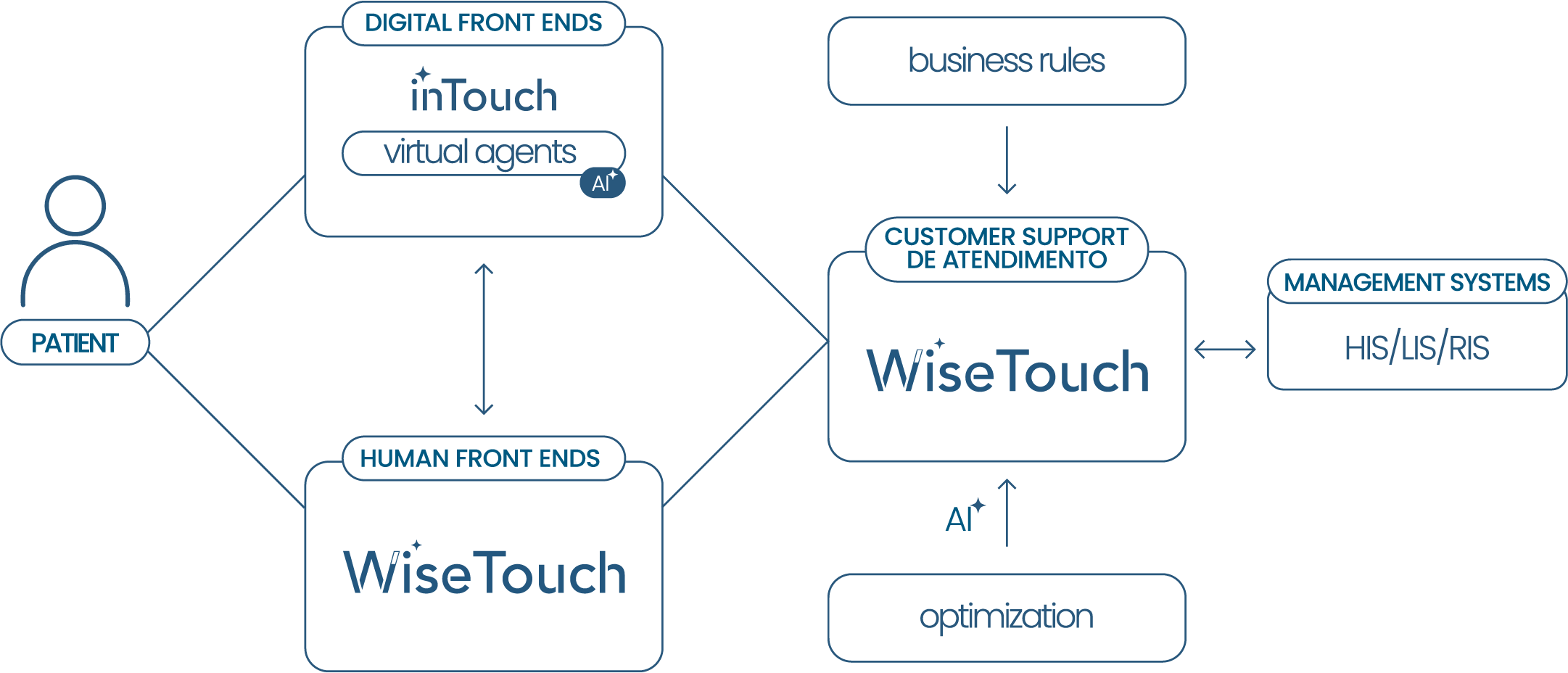
By implementing a solution that brings intelligence to your institution’s gateway, you simultaneously gain operational efficiency, better resource utilization, and increased patient loyalty.
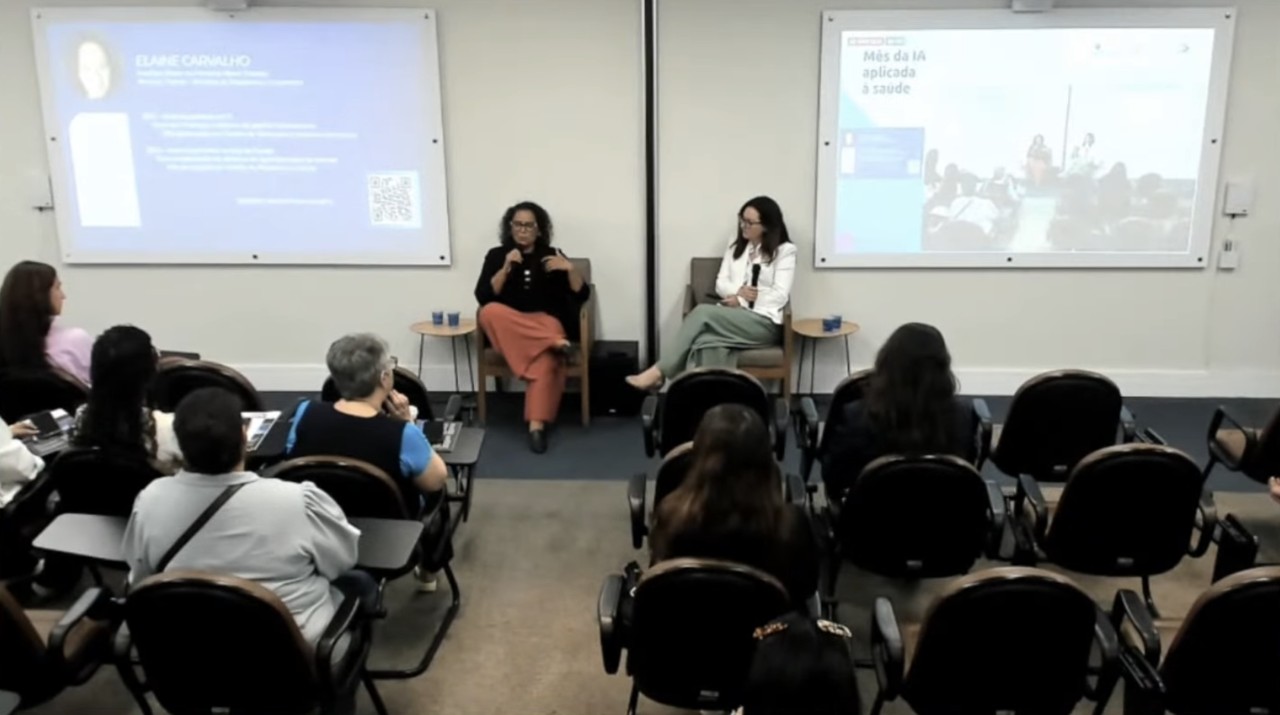
On August 22, 2025, Elaine Carvalho, Senior Analyst at Hospital Israelita Albert Einstein, presented the case “From Image to Action: AI in Exam Scheduling” at the 2nd Showcase of Artificial Intelligence in Brazilian Hospitals, hosted by ABCIS (Brazilian Association of CIOs and IT Managers in Private and Public Healthcare).
The presentation demonstrated how the automated AI medical order reading solution, combined with the validation and automation features of WiseTouch, brought significant gains to the institution.
This case perfectly illustrates how new technologies can deliver tangible results when applied intelligently and objectively to real, latent problems. The project achieved a 60% reduction in registration errors, increased service speed, and a more seamless experience for everyone involved.
At Touch Health, we believe that innovation in healthcare only makes sense when it respects the sector’s complex regulations and truly enhances the journey for both patients and professionals.
During her presentation, Elaine highlighted the importance of the partnership: “We managed to build a very interesting partnership with them [Touch Health], and that is what helped us develop this part.”
Key WiseTouch differentiators that contributed to the project’s success include:
Smart Scheduling is a new technology that transforms how medical procedures are booked. It represents a major leap forward compared to conventional scheduling systems because it automates all rules and scheduling processes. This provides a level of quality and efficiency that is simply impossible to achieve with traditional solutions.
WiseTouch integrates with your institution’s HIS (Hospital Information System) to utilize existing parameters such as the procedure menu, insurance providers and plans, coverage, pricing, and patient/physician databases.
While scheduling functions are managed by WiseTouch, every booking is automatically synced back to your HIS upon completion, ensuring a smooth and secure clinical record.
Yes. One of the greatest advantages of adopting WiseTouch is the ability to implement wide-scale digital solutions, even for complex exams, therapies, and treatments.
By moving the “intelligence” of the scheduling process into the system, you can offer patients a much more complete digital experience. Apps, portals, chatbots, and AI Agents can be seamlessly integrated. Additionally, Touch Health offers inTouch, a modular digital journey platform that can integrate with your existing solutions.
An easy way to understand the difference in complexity between scheduling exams and consultations is to think about everything that must be decided during the booking process.
If the appointment is made by an attendant, they are trained, have access to system guidelines, and can consult other systems, colleagues, or supervisors. However, if the scheduling is done via a digital solution by the patient themselves, all the rules must be in the system; otherwise, the patient would be required to know them all.
With that in mind, let’s compare the digital journeys of consultations versus exams and their biggest challenges.
Consultation Journey
Exams (Diagnostic) Journey
Para rentabilizar seus recursos. Organizar a porta de entrada traz eficiência para todos os processos que vêm na sequência.
O algoritmo inteligente otimiza automaticamente a alocação de seus recursos, considerando variáveis como taxas de ocupação, procedimentos simultâneos, durações variáveis, rentabilidade de locais e horários, entre muitos outros.
O paciente melhor informado, com preparos estruturados, e com horários mais convenientes e melhor sequenciados, chega melhor preparado e tem um atendimento mais fluído.
Para ter mais efetividade em seu call center. Desde o tempo de treinamento de novos colaboradores até a facilidade no manuseio do sistema, o agendamento inteligente traz ganhos de eficiência para o call center, por tornar simples um processo de regras complexas.
Para dar uma experiência melhor ao paciente. Apenas informações necessárias são pedidas ao paciente. Apenas informações necessárias são fornecidas ao paciente. Tudo de forma consolidada e de fácil compreensão. O paciente tem uma experiência com menos tempo de espera, menos tempo de atendimento, menos necessidade de rechamadas, menor tempo de permanência na unidade, e menos reclamações.
Para se preparar para o futuro. As tecnologias baseadas em IA vão revolucionar a forma como é prestado atendimento ao cliente, potencializando muito as soluções digitais. Porém, sem as regras de agendamento em sistema, o uso de soluções digitais (com ou sem IA) estará severamente limitado, sobretudo para procedimentos de maior complexidade no agendamento, como exames, tratamentos e terapias.
Os ganhos com a implantação do agendamento inteligente vão além da produtividade no seu call center (redução do TMA, redução do tempo de espera etc).
Vamos aqui enfatizar duas fontes de ganhos significativas, que devem ser levadas em conta no cálculo do ROI do projeto.
1. Ganhos com maior adoção de soluções digitais
Soluções digitais que combinam a capacidade de entender as regras de negócio do Agendamento Inteligente com a capacidade de se comunicar fluidamente da IA, possuem alta efetividade e grande alcance.
Com elas, mesmo para atendimento complexos como os de SADT, é possível desafogar significativamente o call center. Sem o Agendamento Inteligente, o percentual de uso efetivo de soluções digitais (com ou sem IA) atinge um limite, que tipicamente está entre 20% e 30% (podendo ser um pouco maior dependendo da instituição). Com Agendamento Inteligente e boas soluções digitais, como o inTouch, esse percentual pode ser bem mais alto, ultrapassando 50%. Com a evolução da IA e os agentes de conversa livre (chat, whatsapp e voz), a adoção certamente será bem maior. A tendência é que a estrutura tradicional de atendimento passe a lidar com casos ou pacientes mais complexos, com o transbordo e o controle de qualidade das soluções digitais.
O custo do atendimento por soluções digitais é uma fração do atendimento telefônico tradicional. Os números podem variar de uma instituição para outra, mas tipicamente o atendimento digital custa de 10% a 20% do que custa o tradicional (se o tradicional custa R$10,00, o digital custa R$2).
Portanto, cada percentual do atendimento efetivamente transferido para o canal digital traz ganhos significativos, que podem ser calculados com relativa facilidade.
Se sua instituição faz agendamento de SADT, quanto poderia economizar no custo do atendimento se o percentual de adoção de soluções digitais for de 25% para 60%?
2. Ganhos com a rentabilização de seus recursos
A realização de procedimentos médicos depende de recursos especializados: médicos e outros profissionais de saúde, equipamentos, e locais bem preparados. Estes recursos representam custos significativos para a instituição, e seu bom aproveitamento é chave para a rentabilidade do negócio. O tempo ocioso custa muito. A estrutura está lá, quer o procedimento seja feito ou não.
O Agendamento Inteligente tem o potencial de melhorar a utilização dos recursos, na medida em que organiza a porta de entrada do paciente, e fornece às instituições ferramentas de controle para as principais fontes de desperdício de tempo operacional, tais como: redução de no-show, balanceamento de demanda (equalização de taxas de ocupação), sequenciamento ótimo entre procedimentos, pacientes melhor informados, otimização das durações e dos encaixes, entre muitas outras.
Já houve casos de aumento de produtividade da mesma estrutura operacional, apenas pela organização do processo de agendamento, de aproximadamente 15%.
Mesmo sem um ganho expressivo como este, até com ganhos menores, o impacto financeiro é muito grande.
Quanto contribui na margem da empresa um aumento de 10% na realização de determinado tipo de exame, sem aumento da capacidade instalada?
Specialized solutions deliver better results.
Speak with our experts and discover how WiseTouch can transform the way you schedule medical procedures.