




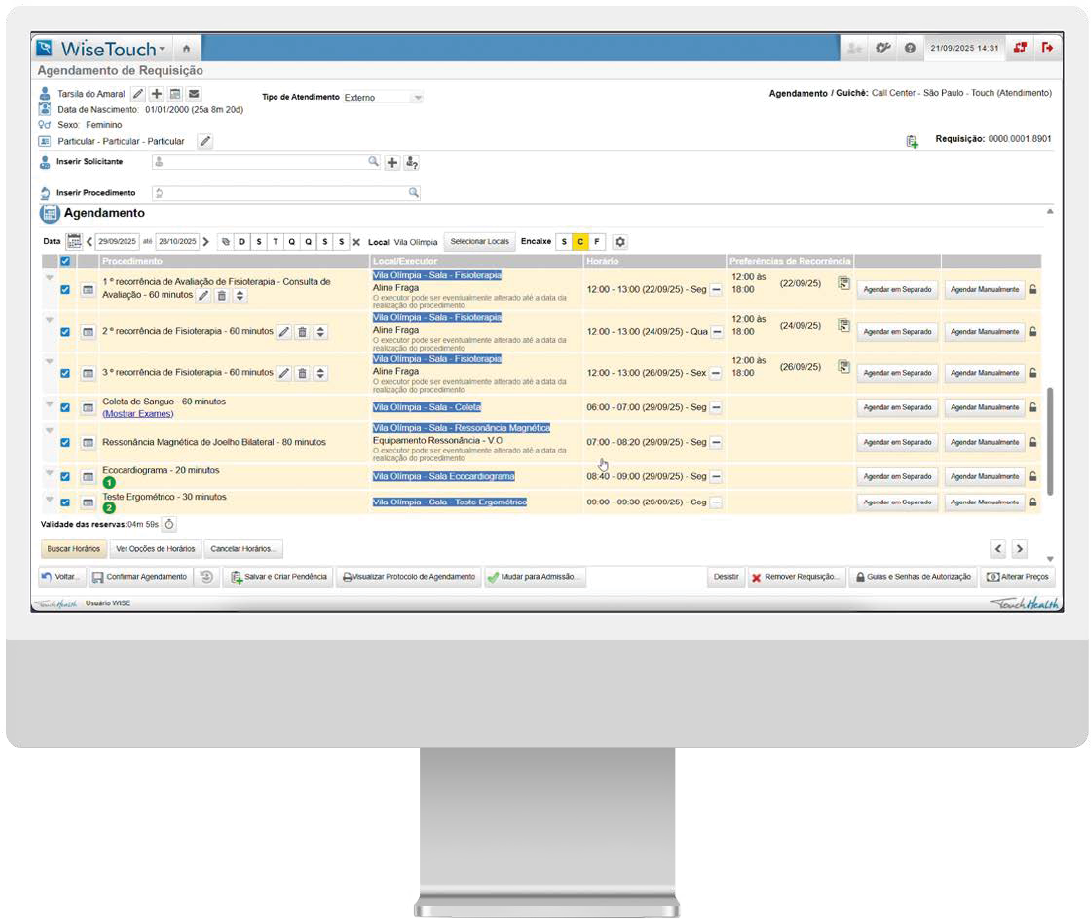
WiseTouch is a Patient Intelligence solution for medical procedures, including exams, consultations, therapies, and treatments.
WiseTouch manages the entire scheduling workflow: from calendar configuration and call center operations to on-site bookings and appointment confirmations.
Once scheduled, every appointment is seamlessly integrated with clinical management systems (HIS, RIS, LIS), ensuring a smooth and secure operation.
WiseTouch is designed for Hospitals, Clinics, and Diagnostic Centers of all sizes.
Touch Health offers various plans tailored to companies with different profiles and needs.


With built-in intelligent interaction, WiseTouch enables digital front-end solutions for all types of procedures, including SADT (Support for Diagnosis and Therapy) and prepares your institution for the AI revolution.
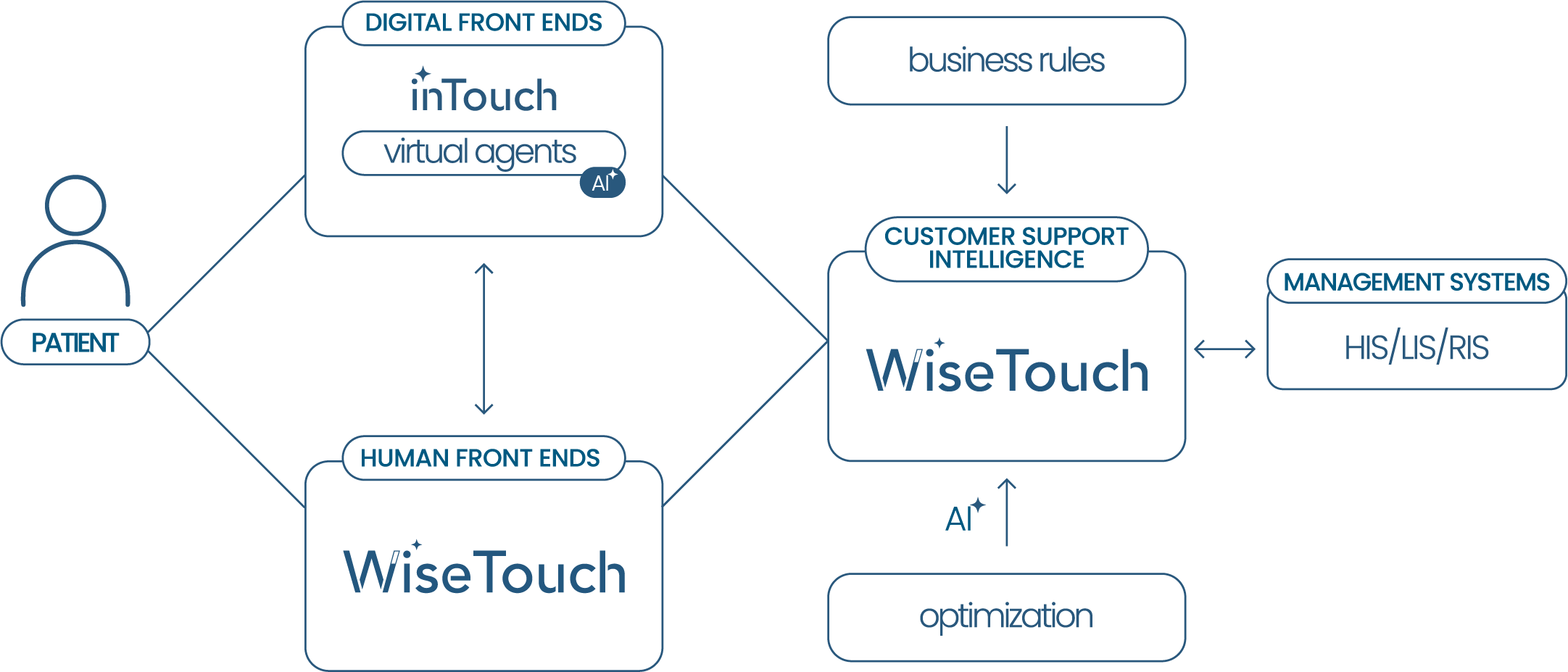
By implementing a solution that brings intelligence to your institution’s gateway, you simultaneously gain operational efficiency, better resource utilization, and increased patient loyalty.
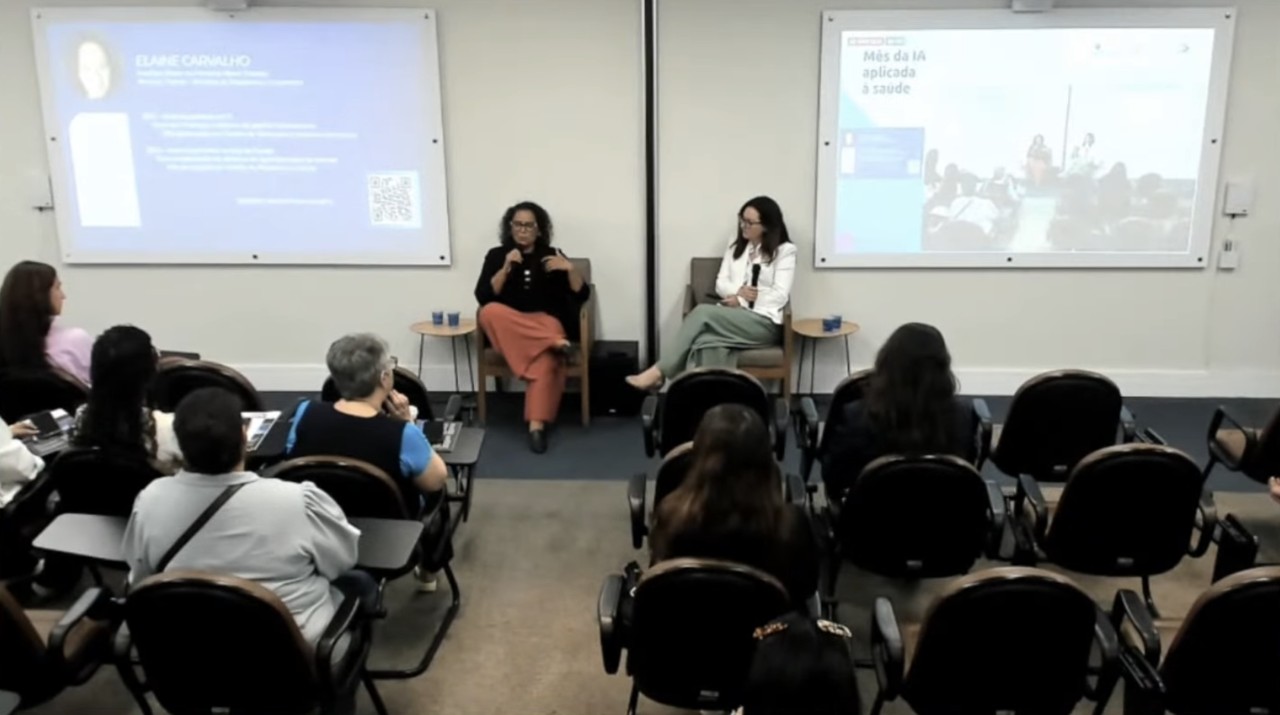
On August 22, 2025, Elaine Carvalho, Senior Analyst at Hospital Israelita Albert Einstein, presented the case “From Image to Action: AI in Exam Scheduling” at the 2nd Showcase of Artificial Intelligence in Brazilian Hospitals, hosted by ABCIS (Brazilian Association of CIOs and IT Managers in Private and Public Healthcare).
The presentation demonstrated how the automated AI medical order reading solution, combined with the validation and automation features of WiseTouch, brought significant gains to the institution.
This case perfectly illustrates how new technologies can deliver tangible results when applied intelligently and objectively to real, latent problems. The project achieved a 60% reduction in registration errors, increased service speed, and a more seamless experience for everyone involved.
At Touch Health, we believe that innovation in healthcare only makes sense when it respects the sector’s complex regulations and truly enhances the journey for both patients and professionals.
During her presentation, Elaine highlighted the importance of the partnership: “We managed to build a very interesting partnership with them [Touch Health], and that is what helped us develop this part.”
Key WiseTouch differentiators that contributed to the project’s success include:
Patient Intelligence is a new technology that transforms how medical procedures are booked. It represents a major leap forward compared to conventional scheduling systems because it automates all rules and scheduling processes. This provides a level of quality and efficiency that is simply impossible to achieve with traditional solutions.
WiseTouch integrates with your institution’s HIS (Hospital Information System) to utilize existing parameters such as the procedure menu, insurance providers and plans, coverage, pricing, and patient/physician databases.
While scheduling functions are managed by WiseTouch, every booking is automatically synced back to your HIS upon completion, ensuring a smooth and secure clinical record.
Yes. One of the greatest advantages of adopting WiseTouch is the ability to implement wide-scale digital solutions, even for complex exams, therapies, and treatments.
By moving the “intelligence” of the scheduling process into the system, you can offer patients a much more complete digital experience. Apps, portals, chatbots, and AI Agents can be seamlessly integrated. Additionally, Touch Health offers inTouch, a modular digital journey platform that can integrate with your existing solutions.
An easy way to understand the difference in complexity between scheduling exams and consultations is to think about everything that must be decided during the booking process.
If the appointment is made by an attendant, they are trained, have access to system guidelines, and can consult other systems, colleagues, or supervisors. However, if the scheduling is done via a digital solution by the patient themselves, all the rules must be in the system; otherwise, the patient would be required to know them all.
With that in mind, let’s compare the digital journeys of consultations versus exams and their biggest challenges.
Consultation Journey
Exams (Diagnostic) Journey
To optimize your resources. Organizing the entry point brings efficiency to all subsequent processes.
The intelligent algorithm automatically optimizes the allocation of your resources, considering variables such as occupancy rates, simultaneous procedures, variable durations, profitability of locations and schedules, among many others.
A better-informed patient, with structured preparations, and with more convenient and better-sequenced schedules, arrives better prepared and has a more fluid service.
To have more effectiveness in your call center. From the training time of new employees to the ease of handling the system, intelligent scheduling brings efficiency gains to the call center by simplifying a process with complex rules.
To give the patient a better experience. Only necessary information is requested from the patient. Only necessary information is provided to the patient. Everything in a consolidated and easy-to-understand way. The patient has an experience with less waiting time, less service time, less need for callbacks, shorter stay in the unit, and fewer complaints.
To prepare for the future. AI-based technologies will revolutionize the way customer service is delivered, greatly enhancing digital solutions. However, without scheduling rules in a system, the use of digital solutions (with or without AI) will be severely limited, especially for procedures with greater scheduling complexity, such as exams, treatments, and therapies.
The benefits of implementing Patient Intelligence go beyond productivity in your call center (reduced average handling time, reduced wait times, etc.).
Here we will emphasize two significant sources of gains that should be considered when calculating the project’s ROI.
1. Gains from increased adoption of digital solutions
Digital solutions that combine the ability to understand the business rules of Intelligent Scheduling with the ability to communicate fluidly of AI have high effectiveness and wide reach.
With them, even for complex service requests such as those of diagnostic and therapeutic support services, it is possible to significantly relieve the call center. Without Intelligent Scheduling, the percentage of effective use of digital solutions (with or without AI) reaches a limit, which is typically between 20% and 30% (and may be slightly higher depending on the institution). With Intelligent Scheduling and good digital solutions, such as inTouch, this percentage can be much higher, exceeding 50%. With the evolution of AI and free-flowing conversational agents (chat, WhatsApp, and voice), adoption will certainly be much greater. The trend is for the traditional healthcare structure to handle more complex cases or patients, with the overflow and quality control of digital solutions.
The cost of digital solutions is a fraction of the cost of traditional telephone care. The numbers may vary from institution to institution, but typically digital care costs 10% to 20% of what traditional care costs (if traditional care costs R$10.00, digital care costs R$2).
Therefore, each percentage point of care effectively transferred to the digital channel brings significant gains, which can be calculated relatively easily.
If your institution schedules diagnostic and therapeutic support services (SADT), how much could you save on care costs if the adoption of digital solutions increases from 25% to 60%?
2. Gains from the profitability of your resources
The performance of medical procedures depends on specialized resources: doctors and other healthcare professionals, equipment, and well-prepared facilities. These resources represent significant costs for the institution, and their efficient use is key to the profitability of the business. Idle time is very costly. The structure is there, whether the procedure is performed or not.
Intelligent Scheduling has the potential to improve resource utilization by organizing the patient’s entry point and providing institutions with control tools for the main sources of operational time waste, such as: reducing no-shows, balancing demand (equalizing occupancy rates), optimal sequencing between procedures, better-informed patients, optimizing durations and appointment slots, among many others.
There have been cases of increased productivity of the same operational structure, simply by organizing the scheduling process, of approximately 15%.
Even without such a significant gain, or even with smaller gains, the financial impact is very large.
How much does a 10% increase in the performance of a certain type of exam contribute to the company’s margin, without increasing installed capacity?
Specialized solutions deliver better results.
Speak with our experts and discover how WiseTouch can transform the way you schedule medical procedures.